
Benfica’s academy is powering Portugal’s future
Benfica’s academy is powering Portugal’s future

Chia sẻ

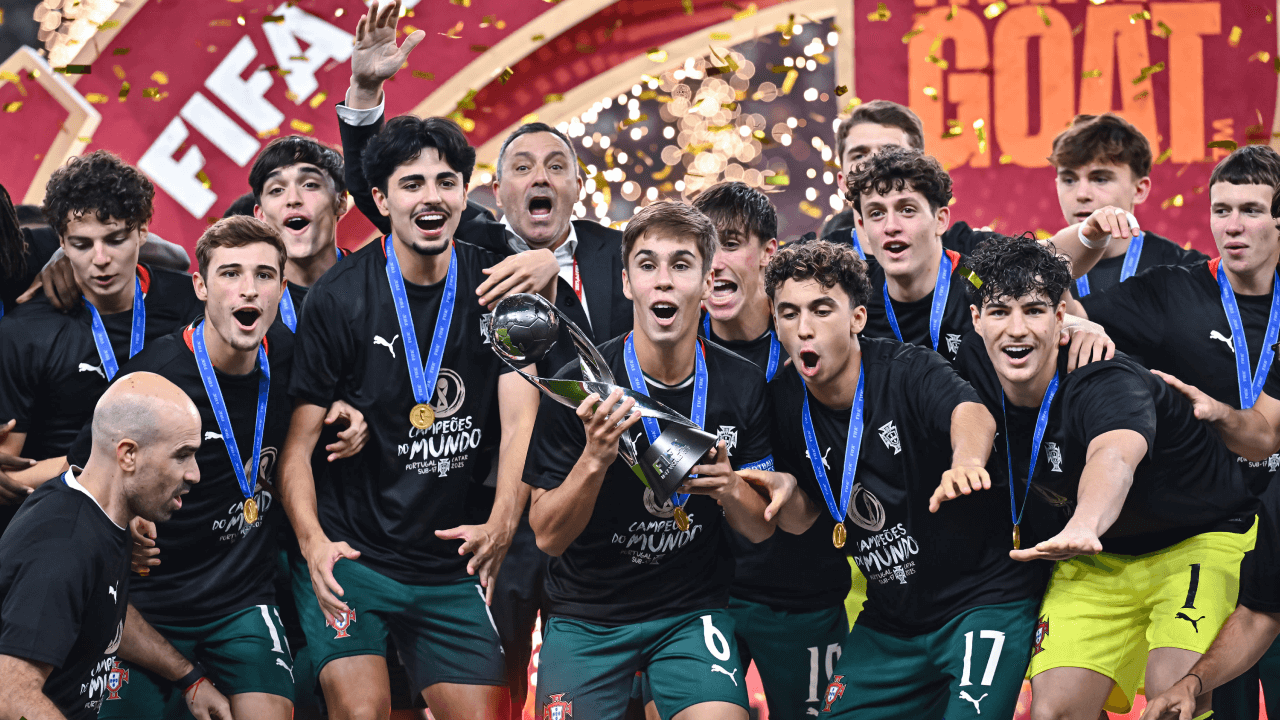
Portugal have just lifted the Under-17s World Cup, beating their Austrian counterparts 1-0 in the final, and none of it would have been possible without Benfica’s continuously producing academy leading the way.


By Alex Roberts


Some of the biggest names in football started their careers at Benfica Academy. Ruben Dias and Bernardo Silva are still ripping it up at Man City, Gonçalo Ramos and João Neves just lifted the Champions League with PSG, and João Félix is finding his feet out in Saudi Arabia…

According to the latest CIES Football Observatory report, Benfica have the most productive academy on the planet, beating out Barcelona’s famed La Masia and River Plate’s River Camp to the top spot with 93 players currently playing professionally.

It’s deeper than that for academy director Guilherme Müller and his staff though. They’re fully aware that not every player that walks through their doors is going to make it as a professional footballer, although the ratio is pretty damn good.

There is also an emphasis on ensuring those in the program have a high academic success rate and contribute to the community alongside all the work they do on the training ground with the aim of creating “good, decent citizens.”

At youth level, one of the hardest things to do is keep that love for the game alive while being a footballer slowly turns into being a job. It’s all encompassing, and an environment that can keep these young players grounded is essential.

Success off the pitch breeds success on it. Benfica were the most represented club at this year’s Under-17 World Cup with ten players amongst their ranks making the trip to Qatar to face off against the very best of their age group.

Daniel Banjaqui, José Neto, Ricardo Neto, Mauro Furtado, Rafael Quintas, Tomás Soares, Miguel Figueiredo, Stevan Manuel, and Anísio Cabral were all part of the Portugal squad, while winger Jaden Umeh, who joined the club in 2024, represented the Republic of Ireland.

Now, they didn’t all have individual tournaments to remember, some stood out more than others. Cabral, Neto, and Quintas were probably Portugal’s best performers and best hopes of making it at the highest level.

Cabral was Portugal’s ever-present number nine. He’s a big lad, holding up play with his physicality, bringing in teammates strong aerial ability and a tidy left foot. He’s a pretty big deal in Benfica’s academy, but he has yet to appear for their first team, or even the B squad, that won’t be the case for much longer, though.

His seven goals in Qatar, including the winner in the final have largely stemmed from his clever movement and knack for being in the right place at the right time. He made incisive diagonal runs, peeled away from defenders inside the box, and produced clinical first-time finishes, punishing defensive lapses with his preferred left foot.

Cabral was an award winner at the U17 World Cup

The youngster is a bit old school, helping knit attacks together with simple, effective link-up play, giving Portugal a solid base without overcomplicating things. His combination of power, work rate and overall technical ability has already drawn interest from foreign clubs.

Neto, a left back, was another standout. Standing at a healthy 6ft, he’s more than capable of shifting into a more central position, and often did throughout the tournament, using his long stride to move the ball up the pitch quickly, and switching play, not unlike recent Benfica academy graduate Antonio Silva.

He’s disciplined, tactically refined, a defender who relishes physical duels and contributes consistently to attacking build up thanks to his stamina and confident ball-carrying.

That end product was really on show here. a brace and two assists in the 6-0 win over Morocco, AND a further two against Switzerland and New Caledonia, three of which were sublime left-footed strikes from the edge of the box. Goal contributions from left-back are a rare thing, if he keeps that up Neto could become a real unicorn of a player.

Finally, we have Quintas. A smooth midfield operator, he was the brains of the outfit. If this was Oceans 11, he would be that one nervous guy who sweats a lot and is really good with computers, but the whole thing would fall apart without him. No offence.

At Benfica, he’s usually deployed as a solitary number six, calming the game down with crisp, forward-minded passes and a silky first touch that helps him and his side out of sticky situations. Maybe he’d be Brad Pitt, then.

Quintas also captained the side, and on the pitch it’s easy to see why. He anticipates play really well, cutting off passing lanes with intelligent positioning, and using his body rather than jumping into tackles and committing fouls.

In attack, he adds value with well-timed supporting runs, smart diagonal switches and the occasional disguised ball that releases wingers into dangerous pockets. Quintas has it all, and he may be the best of the bunch.
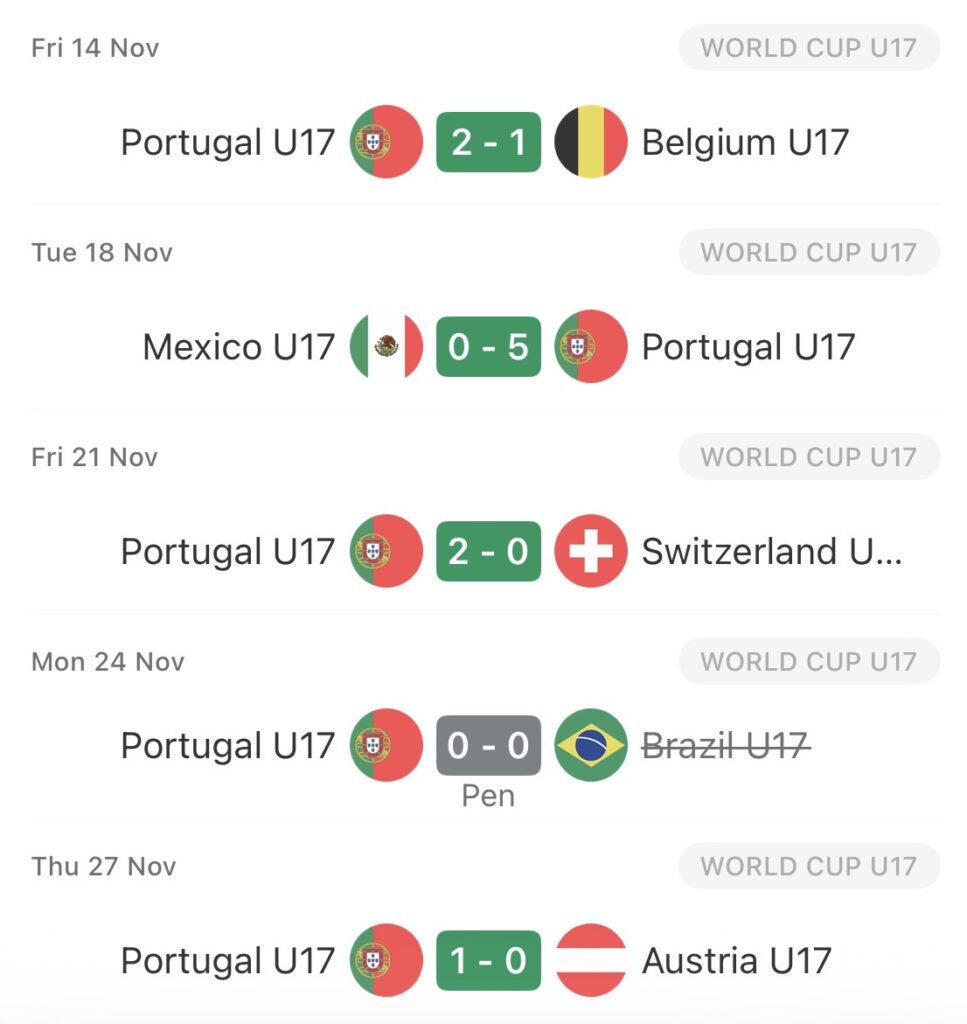
Portugal conceded just once in the knockout stages at the U17 World Cup

The win was a great advert Benfica, and it even brought them and Lisbon rivals Sporting together when academy director Müller said: “This is a historic moment for Portuguese football and a clear demonstration of the talent that our country continues to produce and the success of our training model, based on a very strong investment by the clubs. 

“I would like to extend a special word to the Sport Lisboa e Benfica players who were part of this team”

Now comes the hard part for these young lads, breaking into the first team. Current manager José Mourinho isn’t exactly well known for having much patience with academy grads, just ask Ruben Loftus-Cheek. Thankfully for these youngsters, he probably won’t be there long enough for it to make much of a difference.

There are zero signs of Benfica letting up when it comes to their academy, and that can only be a good thing. They’ve brought in hundreds of millions of Euros thanks to their never ending talent factory, and long may it continue.


(Cover image from IMAGO)


You can follow every game from Portuguese football on FotMob – with in-depth stat coverage, xG, and player ratings, where available. Download the free app here.

Benfica’s academy is powering Portugal’s future

Portugal have just lifted the Under-17s World Cup, beating their Austrian counterparts 1-0 in the final, and none of it would have been possible without Benfica’s continuously producing academy leading the way.


By Alex Roberts


Some of the biggest names in football started their careers at Benfica Academy. Ruben Dias and Bernardo Silva are still ripping it up at Man City, Gonçalo Ramos and João Neves just lifted the Champions League with PSG, and João Félix is finding his feet out in Saudi Arabia…

According to the latest CIES Football Observatory report, Benfica have the most productive academy on the planet, beating out Barcelona’s famed La Masia and River Plate’s River Camp to the top spot with 93 players currently playing professionally.

It’s deeper than that for academy director Guilherme Müller and his staff though. They’re fully aware that not every player that walks through their doors is going to make it as a professional footballer, although the ratio is pretty damn good.

There is also an emphasis on ensuring those in the program have a high academic success rate and contribute to the community alongside all the work they do on the training ground with the aim of creating “good, decent citizens.”

At youth level, one of the hardest things to do is keep that love for the game alive while being a footballer slowly turns into being a job. It’s all encompassing, and an environment that can keep these young players grounded is essential.

Success off the pitch breeds success on it. Benfica were the most represented club at this year’s Under-17 World Cup with ten players amongst their ranks making the trip to Qatar to face off against the very best of their age group.

Daniel Banjaqui, José Neto, Ricardo Neto, Mauro Furtado, Rafael Quintas, Tomás Soares, Miguel Figueiredo, Stevan Manuel, and Anísio Cabral were all part of the Portugal squad, while winger Jaden Umeh, who joined the club in 2024, represented the Republic of Ireland.

Now, they didn’t all have individual tournaments to remember, some stood out more than others. Cabral, Neto, and Quintas were probably Portugal’s best performers and best hopes of making it at the highest level.

Cabral was Portugal’s ever-present number nine. He’s a big lad, holding up play with his physicality, bringing in teammates strong aerial ability and a tidy left foot. He’s a pretty big deal in Benfica’s academy, but he has yet to appear for their first team, or even the B squad, that won’t be the case for much longer, though.

His seven goals in Qatar, including the winner in the final have largely stemmed from his clever movement and knack for being in the right place at the right time. He made incisive diagonal runs, peeled away from defenders inside the box, and produced clinical first-time finishes, punishing defensive lapses with his preferred left foot.

Cabral was an award winner at the U17 World Cup

The youngster is a bit old school, helping knit attacks together with simple, effective link-up play, giving Portugal a solid base without overcomplicating things. His combination of power, work rate and overall technical ability has already drawn interest from foreign clubs.

Neto, a left back, was another standout. Standing at a healthy 6ft, he’s more than capable of shifting into a more central position, and often did throughout the tournament, using his long stride to move the ball up the pitch quickly, and switching play, not unlike recent Benfica academy graduate Antonio Silva.

He’s disciplined, tactically refined, a defender who relishes physical duels and contributes consistently to attacking build up thanks to his stamina and confident ball-carrying.

That end product was really on show here. a brace and two assists in the 6-0 win over Morocco, AND a further two against Switzerland and New Caledonia, three of which were sublime left-footed strikes from the edge of the box. Goal contributions from left-back are a rare thing, if he keeps that up Neto could become a real unicorn of a player.

Finally, we have Quintas. A smooth midfield operator, he was the brains of the outfit. If this was Oceans 11, he would be that one nervous guy who sweats a lot and is really good with computers, but the whole thing would fall apart without him. No offence.

At Benfica, he’s usually deployed as a solitary number six, calming the game down with crisp, forward-minded passes and a silky first touch that helps him and his side out of sticky situations. Maybe he’d be Brad Pitt, then.

Quintas also captained the side, and on the pitch it’s easy to see why. He anticipates play really well, cutting off passing lanes with intelligent positioning, and using his body rather than jumping into tackles and committing fouls.

In attack, he adds value with well-timed supporting runs, smart diagonal switches and the occasional disguised ball that releases wingers into dangerous pockets. Quintas has it all, and he may be the best of the bunch.

Portugal conceded just once in the knockout stages at the U17 World Cup

The win was a great advert Benfica, and it even brought them and Lisbon rivals Sporting together when academy director Müller said: “This is a historic moment for Portuguese football and a clear demonstration of the talent that our country continues to produce and the success of our training model, based on a very strong investment by the clubs. 

“I would like to extend a special word to the Sport Lisboa e Benfica players who were part of this team”

Now comes the hard part for these young lads, breaking into the first team. Current manager José Mourinho isn’t exactly well known for having much patience with academy grads, just ask Ruben Loftus-Cheek. Thankfully for these youngsters, he probably won’t be there long enough for it to make much of a difference.

There are zero signs of Benfica letting up when it comes to their academy, and that can only be a good thing. They’ve brought in hundreds of millions of Euros thanks to their never ending talent factory, and long may it continue.


(Cover image from IMAGO)


You can follow every game from Portuguese football on FotMob – with in-depth stat coverage, xG, and player ratings, where available. Download the free app here.